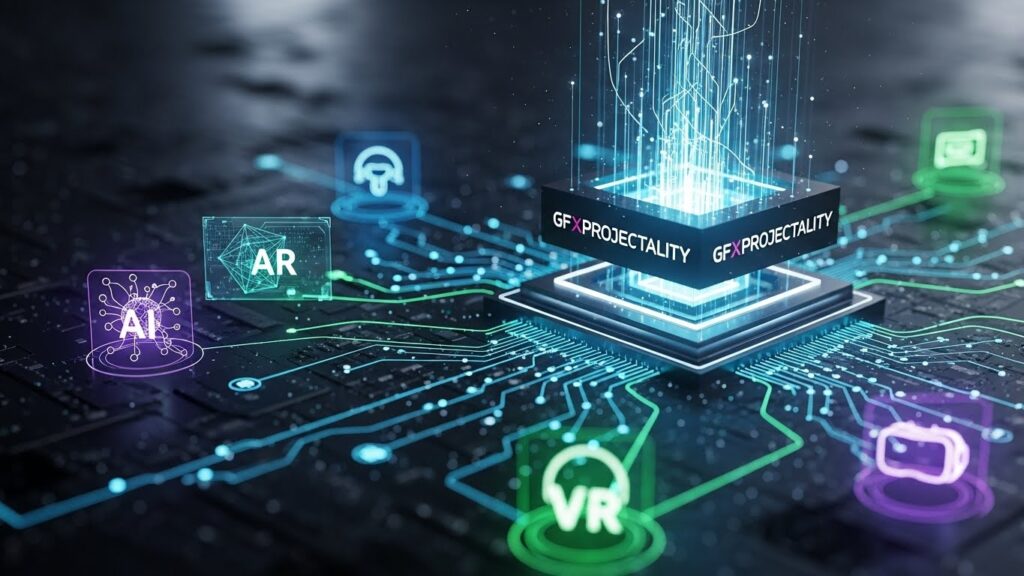

Introduction to GFXProjectality
In today’s world, technology is moving faster than ever. One exciting area is called GFXProjectality, which combines graphics, gaming, and cutting-edge technology like AI, AR, and VR. GFXProjectality is changing how we see and interact with digital content. Instead of just looking at screens, we can now step into worlds, control objects with our hands, and even let computers think creatively for us. This is not just for adults or gamers; children and students can also experience and enjoy these changes.
The main goal of GFXProjectality is to make visuals more realistic, interactive, and fun. Whether it is watching a video, playing a game, or learning something new, GFXProjectality improves the way we experience digital media. It also brings AI-powered tools that help artists, designers, and programmers create amazing graphics faster than ever before.
In this article, we will explore how AI, AR, VR, and other tech trends are shaping visual computing through GFXProjectality. You will understand how this technology is used in gaming, education, digital media, and even future devices.
AI’s Role in Visual Computing
Artificial Intelligence, or AI, is one of the most important parts of GFXProjectality. AI is like a super-smart brain inside a computer. It can analyze data, learn patterns, and make decisions without human help. In visual computing, AI helps create lifelike images, animations, and videos.
For example, AI can generate realistic characters in video games. Before AI, artists had to spend hours drawing every detail of a character. Now, AI can create a character automatically and even adjust facial expressions, movements, and clothes. This saves time and lets creators focus on more creative ideas.
AI also helps improve image quality. Have you ever watched an old video or a blurry photo and wished it looked better? AI can fix it by increasing the resolution and making it sharper. It can also recognize objects in images or videos and even change backgrounds without much effort. This makes visual computing faster, smarter, and more impressive.
Another exciting AI feature is deep learning. Deep learning is a type of AI that studies thousands of images to learn how to create new ones. For example, AI can design a new landscape, a city, or even fantasy creatures just by learning from existing pictures. This technology is now being used in games, movies, and virtual reality experiences, making visuals more realistic than ever.
AR and VR Transforming Graphics
AR (Augmented Reality) and VR (Virtual Reality) are key parts of GFXProjectality. These technologies allow people to experience graphics in new ways. AR adds digital objects to the real world. For instance, in AR games, you can see monsters or characters appear in your room through a tablet or phone screen. It makes digital graphics feel real and interactive.
VR, on the other hand, takes you completely into a digital world. With VR headsets, you can explore new lands, fly in space, or walk underwater. Every object you see in VR is created using advanced graphics and AI tools. This level of immersion makes VR popular in gaming, training, education, and even art.
GFXProjectality uses AR and VR together with AI-generated visuals to create experiences that were once only imaginable. Imagine visiting a museum virtually where the paintings move and tell stories, or learning about dinosaurs by walking among them in a VR forest. This is what GFXProjectality is making possible today.
Impact on Gaming Industry
The gaming industry has been transformed by GFXProjectality. AI, AR, and VR allow developers to create games that are more immersive, interactive, and exciting. In the past, games were flat and limited to a screen. Now, players can step into the game and interact with every object as if it were real.
AI also makes games smarter. In many games, opponents or enemies can now learn your actions and respond differently each time you play. This makes every game unique and challenging. AI can also create dynamic game worlds that change based on your decisions, giving a personalized gaming experience.
AR games are also very popular among kids and adults. Games like scavenger hunts or interactive puzzles let you explore your real environment while interacting with digital objects. GFXProjectality combines AI and AR to make these games smarter, more fun, and visually stunning.
VR gaming takes immersion to the next level. Players can now physically move, dodge, or jump in virtual worlds. Advanced graphics created by GFXProjectality make these worlds appear realistic, while AI adjusts the environment based on player behavior. This is changing how we see gaming forever.
Digital Media Evolution
GFXProjectality is not just for gaming; it is also transforming digital media. Movies, animations, and videos now use AI, AR, and VR to create incredible effects. AI can generate visual effects, animate characters, and even compose music to match the scenes.
AR allows audiences to interact with movies and advertisements. For example, a viewer can point a phone at a poster and see a 3D animation pop up. This kind of interaction makes digital media more engaging and memorable.
VR can make storytelling more immersive. Imagine being inside a storybook where you can touch objects, follow characters, or change the story by making choices. This level of engagement is made possible by GFXProjectality’s combination of AI, VR, and graphics technology.
Content creators, designers, and filmmakers now use GFXProjectality tools to save time, reduce costs, and experiment creatively. Even social media and educational platforms are adopting these trends to make visuals more exciting and informative for everyone.
Edge Computing and Real-Time Graphics
Edge computing is another trend in GFXProjectality that improves visual computing. Traditionally, computers or servers do all the processing. But with edge computing, data is processed closer to the device, like your phone or VR headset. This reduces delays and makes graphics appear faster and smoother.
This is especially important for AR and VR, where real-time graphics are essential. If a VR game or AR application lags, the experience feels unrealistic. Edge computing ensures that visuals are processed instantly, giving a seamless experience.
Edge computing also works with AI to analyze data quickly. For example, in a multiplayer VR game, edge devices can adjust the graphics and AI behavior instantly for each player. This combination of AI, edge computing, and GFXProjectality is making immersive experiences faster, smarter, and more reliable than ever.
5G and Immersive Experiences
The arrival of 5G networks is another reason GFXProjectality is thriving. 5G provides super-fast internet speeds, low latency, and reliable connections. This is essential for streaming high-quality AR and VR content, playing online games, and collaborating in digital media projects.
With 5G, it is now possible to download, upload, and stream large graphics-heavy content in seconds. VR multiplayer games, AR apps, and AI-driven digital media all benefit from the speed and stability of 5G networks.
5G also allows for cloud-based visual computing, where AI and graphics processing happen in the cloud instead of the device. This means even small devices like tablets and smartphones can run high-quality AR, VR, and AI experiences without needing powerful hardware. GFXProjectality leverages 5G to expand the possibilities of visual computing and digital interaction.
Physical AI in Visual Tech
Physical AI is an emerging trend in GFXProjectality that combines AI with real-world objects. This allows digital systems to interact with physical environments in smarter ways. For example, robots in VR or AR spaces can now learn from their surroundings, respond to human gestures, and even simulate real-world physics accurately.
In visual computing, Physical AI makes simulations more realistic. In a VR training program, a trainee can move objects, feel resistance, or interact naturally with virtual tools. AI monitors actions and adapts the environment, making learning faster and more effective.
Physical AI also improves gaming and creative tools. For instance, AR drawing apps can understand the position of your hands, tools, and real-world objects to create more precise digital art. This integration of real and virtual worlds is a key feature of GFXProjectality’s future vision.
Future Trends in GFXProjectality
The future of GFXProjectality is bright. AI, AR, VR, edge computing, 5G, and Physical AI will continue to transform how we see and interact with digital content. Games will become more immersive, movies more interactive, and learning experiences more engaging.
We can expect smarter AI-generated graphics, fully interactive AR experiences in everyday life, and VR worlds that feel indistinguishable from reality. GFXProjectality will also influence areas like healthcare, architecture, and design, where visualization is crucial.
Another exciting trend is collaborative virtual spaces. People across the world will be able to meet, work, and play in virtual environments with realistic graphics and AI-driven interactions. This will change education, entertainment, and remote collaboration forever.
Conclusion: Shaping the Digital World
GFXProjectality is at the heart of tech trends in visual computing. AI, AR, VR, edge computing, 5G, and Physical AI are not just technologies—they are tools that reshape how we experience games, movies, education, and digital media.
Children, students, and creators can all enjoy the benefits of GFXProjectality today, while the future promises even more exciting experiences. The combination of AI and immersive graphics makes digital content more interactive, engaging, and fun. Whether it is gaming, learning, or storytelling, GFXProjectality ensures that visual computing will continue to evolve and amaze people around the world.
By understanding these trends, we can appreciate how technology is making our digital experiences smarter, faster, and more realistic. The future of GFXProjectality is bright, and it is shaping a world where imagination and technology come together like never before.