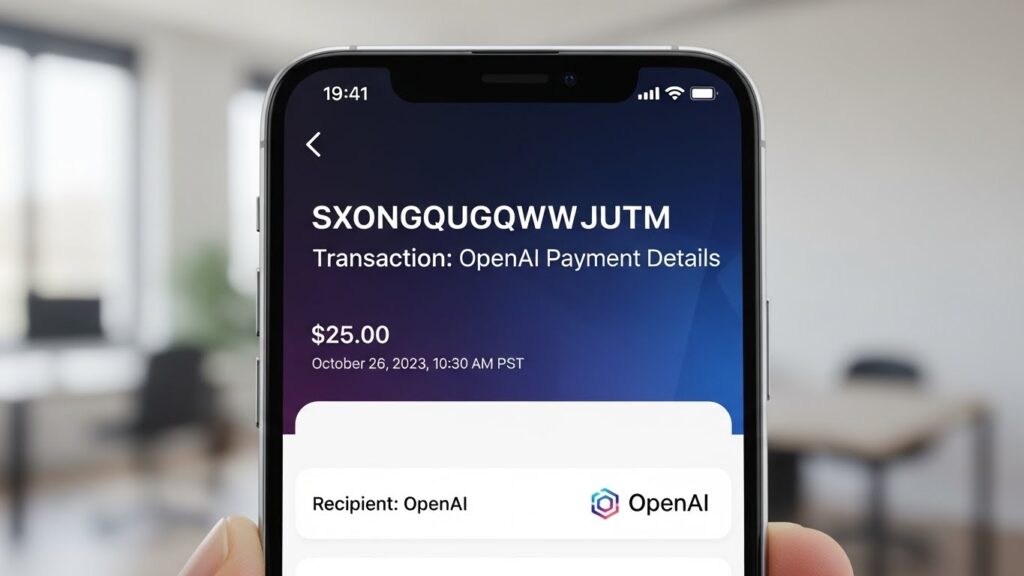

Understanding SXONGQUGQWWJUTM
If you recently checked your bank statement, you might have seen a strange code like SXONGQUGQWWJUTM. At first, it can look confusing or even worrying. But don’t panic—this code usually refers to a payment made to OpenAI, a company based in San Francisco, USA. Banks often use such long codes to identify transactions. It helps them track who sent money, who received it, and for what purpose.
Every time you make an online payment, your bank records it with a unique code. For OpenAI payments, this code appears on your statement as SXONGQUGQWWJUTM\USA\SAN FRANCISCO\OPENAI. This is completely normal and shows that the payment has been processed successfully. Understanding these codes can help you avoid confusion and quickly verify legitimate transactions.
The purpose of SXONGQUGQWWJUTM is mainly for identification. It ensures that both the bank and the company receiving money know exactly which account to credit. It’s especially important for online companies like OpenAI, which manage millions of transactions every month.
Why It Appears on Your Bank Statement
Seeing SXONGQUGQWWJUTM on your bank statement doesn’t mean there’s a problem. Banks display this code to give you a clear record of payments. Sometimes people notice it and worry because the code looks random or strange. The reason it appears is simple: it helps your bank and OpenAI track the payment accurately.
This code will usually show up if you have paid for OpenAI services, like subscriptions to tools or APIs. Even if you only signed up for a trial or a small monthly plan, the code will appear to indicate that OpenAI received the payment. Banks and companies use such codes instead of names sometimes because they are secure and less prone to errors.
Link to OpenAI Payments
The SXONGQUGQWWJUTM code is directly linked to payments made to OpenAI. OpenAI offers a variety of services, such as ChatGPT subscriptions, API usage for apps, and other AI tools. When you pay for these services, your bank sends the transaction to OpenAI, and this code appears on your statement.
It’s also important to remember that this code is unique. Every transaction has its own code to prevent confusion. If you see the same code repeatedly, it usually refers to recurring payments or subscriptions. Always check your billing cycle to match it with OpenAI’s services.
If you ever see Unrecognized billing from OPENAI, you can check it here: Unrecognized billing from OPENAI. This takes you directly to OpenAI’s community support, where you can get guidance on unknown or disputed charges.
How to Verify the Transaction
Verifying a SXONGQUGQWWJUTM transaction is easier than it seems. First, check the date and amount of the payment on your bank statement. Compare it to any subscription or purchase you made with OpenAI. If the amount and date match your payment history, the transaction is legitimate.
You can also log in to your OpenAI account to check your billing history. OpenAI provides a clear record of all payments, including subscription plans and one-time charges. Matching your bank statement with OpenAI’s records ensures that everything is correct.
If you notice a transaction that you don’t recognize, contact your bank immediately. Your bank can help investigate the payment and provide more details. Always keep your transaction records safe and monitor your accounts regularly.
Common Questions About SXONGQUGQWWJUTM
Many people have similar questions when they see SXONGQUGQWWJUTM on their statements. One common question is, “Why does the code look so strange?” Banks use random-looking codes to protect customer data and ensure transactions are secure.
Another question is, “Can someone steal my money using this code?” No. The code is only for record-keeping and cannot be used to access your account. It’s a reference, not a password or key.
Finally, some people ask, “What if I didn’t pay OpenAI but see the code?” In that case, contact OpenAI or your bank immediately. Mistakes happen, and both institutions have procedures to resolve issues safely.
Tips for Safe Online Payments
Making online payments safely is very important. Here are some tips to protect yourself when paying for OpenAI services or any other online platform:
- Always use trusted payment methods, like your bank’s online portal or secure payment apps.
- Keep your account passwords strong and unique.
- Check your bank statements regularly to spot any unusual transactions.
- Enable notifications for every transaction so you know immediately if money is spent.
- Avoid sharing your card details on unknown websites or platforms.
Following these tips can prevent unauthorized transactions and give you peace of mind when using online services.
Tracking Your OpenAI Payments
Tracking payments with OpenAI is simple. Log in to your account and go to the billing section. Here you can see every payment made, including the date, amount, and service purchased. This helps match transactions with the SXONGQUGQWWJUTM code on your bank statement.
For subscription services, OpenAI usually charges automatically each month. Knowing your billing schedule helps you anticipate payments and avoid confusion. If something seems off, you can contact OpenAI’s support immediately for clarification.
Tracking payments is not only about verifying transactions but also about managing your budget. Keeping records of online subscriptions helps you avoid accidental overspending.
Preventing Transaction Confusion
To prevent confusion with codes like SXONGQUGQWWJUTM, always note your online payments. Save receipts and emails confirming purchases. This way, when you see a strange code on your bank statement, you can quickly match it with your records.
Another helpful tip is to label transactions in your banking app if the option is available. Some banks let you add notes for each payment, making it easier to remember what you paid for.
Using clear records prevents stress and ensures that you can confidently identify legitimate transactions.
Recognizing Legitimate Charges
Knowing whether a charge is legitimate is key to avoiding scams. For SXONGQUGQWWJUTM, recognize these signs: the payment matches your OpenAI service, the amount is correct, and the date matches your subscription or purchase.
If all these factors align, you can be confident that the transaction is valid. If something doesn’t match, investigate immediately. OpenAI provides clear billing support, and banks can reverse suspicious charges if needed.
Keeping a habit of verifying transactions keeps your finances secure and reduces the risk of fraud.
Conclusion: SXONGQUGQWWJUTM Insights
In conclusion, SXONGQUGQWWJUTM is simply a code used by banks to record payments made to OpenAI. It may look confusing at first, but it is completely normal and serves as a way to track transactions accurately. Seeing this code on your bank statement does not mean there is a problem—it simply shows that a payment has been processed successfully.
Understanding this code helps you verify your transactions quickly and avoid unnecessary worry. By regularly checking your bank statements, keeping track of your OpenAI subscriptions, and monitoring your spending, you can ensure that every payment is legitimate and secure. Even though the code may appear random, it plays an important role in maintaining clear and accurate financial records.
With a little awareness and careful checking, managing online payments like those to OpenAI becomes easy and stress-free. By knowing what SXONGQUGQWWJUTM represents, you can confidently understand your bank statements and keep your finances safe.