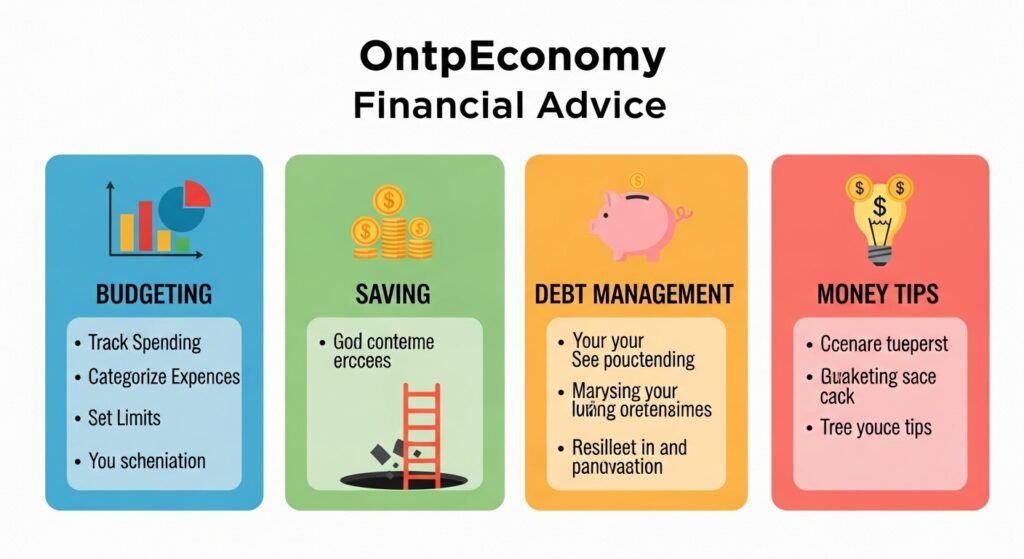

Managing money can feel overwhelming, but with the right guidance, anyone can learn to save, budget, spend wisely, and even reduce debt. Financial Advice OntpEconomy focuses on giving simple, practical tips that help people make smart money choices. By learning a few easy habits, you can take control of your finances, avoid unnecessary stress, and reach your financial goals faster.
Understanding Your Money
Before you can manage money well, you need to understand it. This means knowing exactly how much money you earn, where you spend it, and what your financial habits are. Tracking your money helps you make smarter decisions and avoid surprises. For example, if you notice you spend a lot on snacks or online games, you can adjust your habits to save more.
A good way to start is to write down your income and expenses. Include everything—bills, groceries, transport, small treats, and even money you spend online. This gives you a clear picture of how your money moves. Understanding your finances also helps you plan for the future, like saving for a big purchase or emergency needs.
Creating a Simple Budget
A budget is simply a plan for your money. Financial Advice OntpEconomy emphasizes creating a budget that is clear, realistic, and easy to follow. Start by listing your monthly income. Then, list your monthly expenses, separating them into essentials like food, bills, and transport, and non-essentials like entertainment or dining out.
The goal of a budget is to spend less than you earn. This might mean making small changes, like cutting back on coffee or choosing more affordable entertainment. Over time, budgeting helps you save, reduce debt, and feel more in control of your money.
Budgeting Tips
- Track your spending for one month to see exactly where your money goes.
- Set limits for categories like groceries, entertainment, and transportation.
- Adjust your budget every month if your income or expenses change.
Saving Made Simple
Saving money doesn’t have to be hard or complicated. Financial Advice OntpEconomy teaches that even small, regular savings add up over time. For instance, saving just $5 a week becomes $260 in a year. Separate your savings for short-term goals, like buying a new gadget, and long-term goals, like a car or education.
Automating your savings can make it easier. Set up your bank account to automatically move a fixed amount into savings every month. This way, you save without even thinking about it.
Easy Saving Ideas
- Save small amounts daily, like spare change or a few dollars from allowances or paychecks.
- Create separate savings accounts for different goals.
- Reduce unnecessary spending, like extra subscriptions or impulse purchases.
Smart Spending Strategies
Spending money wisely is just as important as saving it. Financial Advice OntpEconomy stresses thoughtful spending, which means buying what you need and avoiding impulse purchases. Before making a purchase, ask yourself if it is necessary and if it fits your budget.
Other helpful strategies include comparing prices before buying, waiting for sales, and choosing quality over quantity. Smart spending helps you get the most value from your money and reduces waste.
Spending Tips
- Make a shopping list before buying to avoid impulse purchases.
- Compare prices in stores or online to get the best deal.
- Prioritize needs over wants to avoid overspending.
- Consider waiting 24 hours before a purchase to see if it’s really necessary.
Managing Debt Effectively
Debt can be stressful, but with careful planning, it can be managed successfully. Financial Advice OntpEconomy recommends paying off high-interest debts first, as these cost the most over time. Avoid borrowing unnecessarily and try to make payments on time to prevent fees and improve your credit score.
Keeping a list of all debts with their interest rates and minimum payments helps you organize a repayment plan. You can also set small, achievable goals to pay off debt gradually.
Debt Management Tips
- List all debts and focus on paying off the highest-interest debt first.
- Pay more than the minimum when possible to reduce debt faster.
- Avoid new loans unless absolutely necessary.
- Use a calendar or app to track payment dates and avoid late fees.
Planning for Emergencies
Unexpected expenses, like medical bills or car repairs, can happen to anyone. Financial Advice OntpEconomy suggests building an emergency fund to cover at least 3–6 months of essential expenses. This fund acts as a financial safety net, so you won’t have to borrow or stress if something unexpected happens.
Even starting small helps. Saving $10 a week gradually grows into a significant safety net. The key is consistency, not how much you start with.
Emergency Fund Tips
- Start with a small, fixed amount each week or month.
- Keep this money separate from your regular spending account.
- Only use the fund for real emergencies, not for fun purchases.
Building Financial Confidence
The ultimate goal of Financial Advice OntpEconomy is to help you feel confident about money. By understanding your finances, budgeting, saving regularly, spending wisely, managing debt, and preparing for emergencies, you can take control of your financial future. Financial confidence comes from good habits, knowledge, and the ability to make smart choices.
When you build confidence, you’re better prepared for life’s challenges, whether it’s paying bills, saving for a goal, or planning for retirement. Financial independence doesn’t happen overnight, but small, consistent steps lead to big results over time.
Financial Advice OntpEconomy shows that anyone can take charge of their finances. With simple, practical steps, you can reduce stress, grow your savings, manage debt, and make smarter money choices every day. Following these tips will help you not only survive but thrive financially.